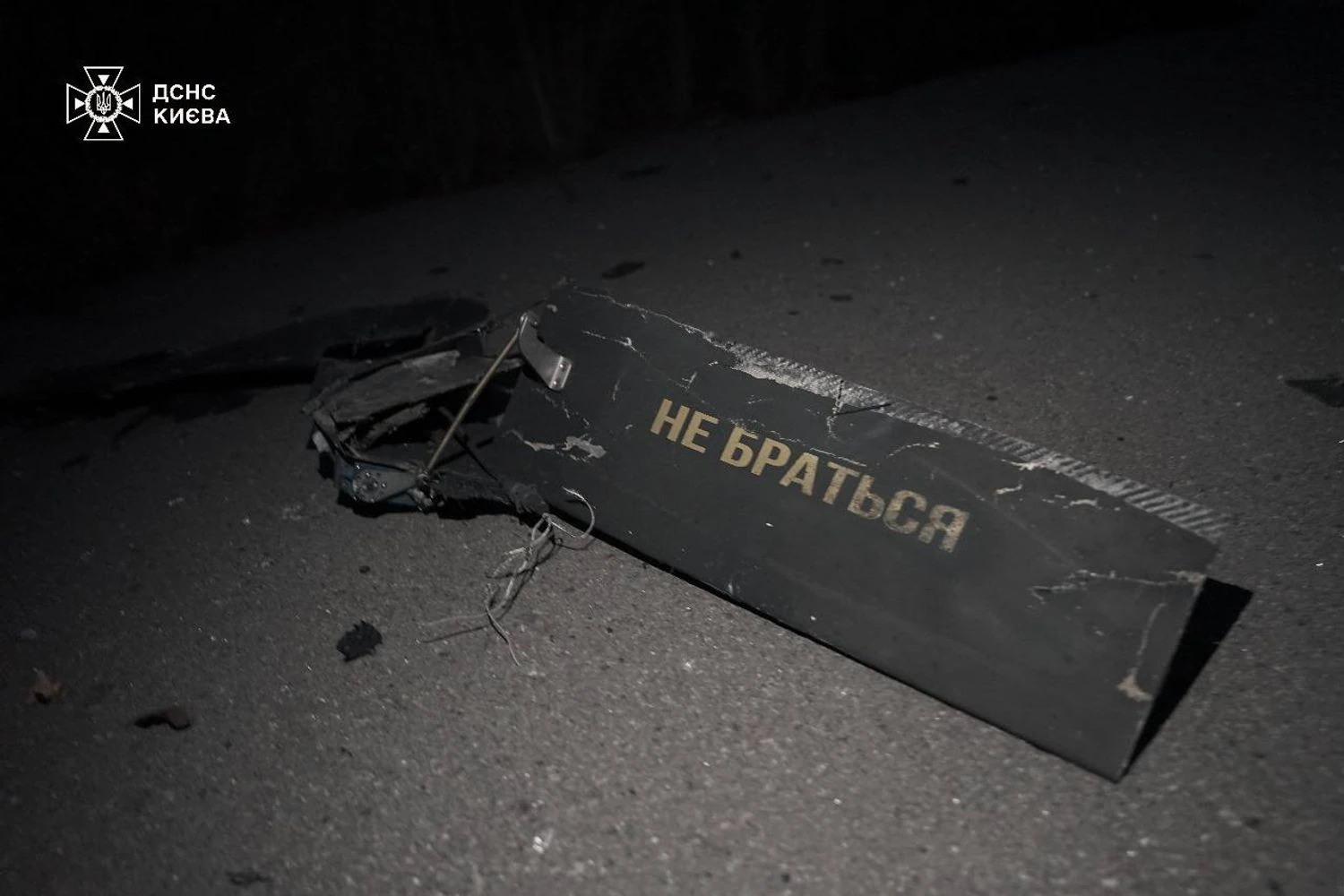
Ukraine Neutralizes Downed Russian Missile in Dnipropetrovsk, Averting Catastrophe
In a testament to the unwavering vigilance and expert skill of Ukraine's emergency services, a downed Russian cruise missile, whose warhead miraculously failed to detonate, was successfully neutralized in the Kryvyi Rih district of the Dnipropetrovsk region. This critical operation, carried out by police explosives experts in collaboration with sappers from the State Emergency Service (SES), averted what could have been a devastating secondary explosion, underscoring the constant threat faced by Ukrainian civilians and the crucial role of specialized teams in mitigating such dangers.
The incident on the night and morning of April 11 was part of a broader, large-scale Russian aerial assault, during which Ukraine’s air defense forces achieved significant success, destroying an impressive 57 aerial targets—including 18 missiles and 39 combat drones. While each intercept represents a victory, the discovery of an unexploded missile poses a unique and insidious threat, requiring precise and methodical intervention to ensure public safety. The professional handling of this particular unexploded ordnance (UXO) in Dnipropetrovsk highlights the multifaceted challenges of modern warfare and the meticulous work involved in making Ukraine safe, one neutralized threat at a time.
The Immediate Threat: Controlled Neutralization in Dnipropetrovsk
The discovery of an intact, unexploded cruise missile warhead in the Kryvyi Rih district presented an immediate and grave danger. Unlike a successful air defense intercept where the threat is neutralized mid-air, a downed, undetonated missile transforms into a ticking time bomb on the ground. The initial impact might have been absorbed by the terrain or a structure, but the explosive material within the warhead remains volatile and capable of causing immense destruction if mishandled or if a delayed detonation occurs.
Police explosives experts, possessing specialized training and equipment, were the first responders on the scene. Their preliminary assessment confirmed that the cruise missile's warhead had not detonated. This finding immediately triggered a coordinated response with sappers from the State Emergency Service – Ukraine’s highly trained bomb disposal units. The collaboration between these agencies is paramount, ensuring that every aspect of the threat is evaluated and managed with the highest level of expertise.
The delicate process involved careful assessment, stabilization, and then the safe transportation of the large, potentially unstable ordnance to a designated detonation site. These sites are typically remote, controlled environments where an explosion can be managed without risk to human life or infrastructure. There, in a controlled manner, the missile was neutralized – effectively disarming it and rendering its explosive payload inert. This meticulous operation in Dnipropetrovsk is a powerful reminder of the hidden dangers of modern conflict and the tireless work of those on the front lines of civilian protection.
Beyond the Blast: Understanding Missile Neutralization
The term "missile neutralized" encompasses a spectrum of defensive actions, ranging from in-flight interception to post-impact controlled detonation. Each method is critical in its own right, addressing different stages of a missile threat.
In-Flight Neutralization: The First Line of Defense
Before a missile even reaches its target, advanced systems are continuously working to detect, track, and intercept it. Modern missile defense systems, often inspired by cutting-edge innovations, utilize sophisticated technology to achieve this. For instance, some advanced concepts explore systems that can determine the precise launch point of ballistic missiles by classifying electromagnetic frequency activity within satellite and land-based commercial and private broadcast spectra. These systems analyze electromagnetic wave disturbances caused by the high-intensity initial fuel burn of a missile launch, essentially "tagging" the event in real-time.
Once detected, the trajectory of the missile is calculated with incredible precision. Systems like the AN/SPY series radar deployed on U.S. Navy Aegis cruisers, along with various GPS-related tracking technologies, are designed to provide crucial data. The goal is to launch an interceptor missile that can physically destroy the incoming threat, often referred to as a kinetic kill.
However, neutralization isn't always about a physical intercept. Theoretical advanced methods also consider non-kinetic approaches, such as transmitting precisely tuned frequency wave combinations from defensive missile-borne frequency generators or networks of satellite/land-based transmitters. The aim of such technology would be to affect the electrical functioning of a missile's guidance system or even its warhead detonator, rendering it inert or causing it to veer off course without a direct physical impact. While these are complex and often experimental technologies, they highlight the continuous innovation in the field of missile defense from detection to controlled neutralization.
The challenge, as outlined in various defense patents and studies, lies in the immense speed of these projectiles, the potential for decoys, and the limited time available for response, especially in the event of a wide-area, multiple-missile assault. Even the most advanced anti-ballistic missile (ABM) systems face limitations, emphasizing the need for robust, multi-layered defenses.
Post-Impact Neutralization: The Safety Net
When in-flight interception fails or is incomplete, as was the case in Dnipropetrovsk, post-impact neutralization becomes paramount. This is the domain of explosive ordnance disposal (EOD) teams and sappers. An undetonated warhead, whether from a cruise missile like the one found or ballistic missiles such as Iskander-M or Zircon, represents unexploded ordnance (UXO). These can be incredibly dangerous due to their instability and the potential for a delayed or accidental detonation. The experts must carefully assess the type of ordnance, its condition, and the surrounding environment before initiating a plan to either render it safe on site or, as in Dnipropetrovsk, transport it to a secure location for controlled detonation. This painstaking work ensures that even after a missile bypasses initial defenses, its destructive potential is ultimately Ukraine's Air Defense Success: Neutralizing Russia's Missile Threat, protecting vital infrastructure and civilian lives.
Protecting Civilians: Practical Steps and Preparedness
While expert teams work tirelessly to neutralize threats, civilian awareness and preparedness are equally crucial. Living under the constant threat of missile attacks requires a proactive approach to personal safety.
- Heed Air Raid Alerts Immediately: When sirens sound, or official alerts are issued, seek shelter without delay. This is not a suggestion; it's a matter of life and death.
- Know Your Shelter: Identify the safest shelters in your area – whether it's a basement, subway station, or designated bomb shelter. If no specialized shelter is available, an interior room on the lowest floor of a building, away from windows and exterior walls, offers some protection. Remember the "two walls" rule: position yourself with at least two walls between you and the outside.
- Prepare an Emergency Kit: A "go bag" should include essentials like water, non-perishable food, a first-aid kit, important documents, a flashlight, a power bank for your phone, and a whistle.
- Stay Informed: Rely on official government channels and trusted news sources for information. Avoid spreading unverified rumors.
- "Two Exits" Rule: When choosing a shelter, ensure it has at least two viable exits in case one becomes blocked.
- Report Unexploded Ordnance (UXO): This is paramount. If you discover a suspicious object that might be an unexploded missile, bomb, or shell (like the one outcome is critical. Ukraine's multi-layered air defense continues to evolve, adapting to the diverse and relentless aerial threats it faces. However, the vigilance and preparedness of its citizens remain equally vital. As the conflict continues, the combined efforts of advanced technology, highly skilled personnel, and an informed populace will continue to define Ukraine's ability to safeguard its people and territory against the destructive reality of modern warfare.